Group work and Collaborators
This concept was developed during the fourth Social Robot Design session as part of Group 1. The aim of the session was to explore how embodiment influences the way a social robot is interpreted, what expectations its body creates, and whether its form fits the intended context of use. For our case, this meant looking critically at different robot bodies from the perspective of an anxious dog and its owner.
Collaborators:
Maurits Dijkman, Bianca Filip, Ewoud Janus, Emilia Pavel, and Gijs Vis
My contribution:
My contribution focused on connecting the embodiment exercise to our pet companion case. I helped analyse the available robots in the morphological overview matrix by looking at size, shape, colour, form-function match, functionality requirements, and expectation match. I also contributed to the development of the Embodiment Fit Tool by translating the matrix observations into design criteria for our own robot: low to the ground, non-humanoid, non-realistic-animal, rounded, visible, calm in movement, and able to retreat. In the portfolio, I further developed the reflection, case connection, and HRI grounding of the tool.
1. Session context
The fourth session focused on embodiment in social robot design. The central question was not only what the robot should do, but what its body makes possible, communicates, or falsely promises. In social robotics, embodiment affects how people interpret capability, intention, safety, social role, and emotional presence.
For our case, embodiment is especially important because the direct user is not only a human owner, but also an anxious pet. A dog cannot verbally explain that a robot is too large, too close, too loud, too fast, or too confusing. Therefore, the robot’s physical form has to communicate safety, predictability, and limited capability without creating unrealistic expectations.
2. State-of-the-art social robot platforms
The session asked whether social robot research still mainly uses Pepper or Nao. My conclusion is: not as a field-wide majority, but they remain very influential platforms.
Historically, Nao has been one of the most widely used social robot platforms. Amirova et al. (2021) reviewed about 300 NAO-focused research works from 2010 to 2020, which shows that Nao has played a major role in HRI research. However, this does not mean that Nao and Pepper are still the majority in every current subfield. For example, Oruma et al. (2022) found that Pepper and Nao were used in 23.8% of empirical studies on social robots in public spaces, which suggests that the platform landscape is more diverse in that domain.
The main design lesson for our project is that available platforms strongly influence research. Pepper and Nao are often used because they are available, recognisable, and already supported by software, sensors, and prior research. However, this does not mean their embodiment is automatically suitable for every case. For an anxious pet in a domestic environment, a humanoid platform may create the wrong expectations. The pet does not need a human-like body, arms, or a face. The owner may also overestimate the robot's emotional understanding if the robot looks too socially capable.
3. Case connection
Our case is a modular pet companion toolkit for a recently adopted anxious dog living in a small apartment with a student or young professional owner. The robot should support low-pressure interaction when the owner is away. It may offer calm presence, gentle play invitations, simple audio cues, and retreat behaviour. It should not claim to diagnose the pet's emotional state.
Before this session, our case was still relatively open in terms of embodiment. We considered whether a robot could be toy-like, animal-like, humanoid, or functional. After the embodiment exercise, the case became more specific: the robot should be low, small-to-medium sized, non-humanoid, non-realistic-animal, soft or rounded, clearly visible to the dog, and limited in its social promises.
4. Design Tool: Embodiment Fit Tool
The design tool developed from this session is called the Embodiment Fit Tool. It is a collection-based and matrix-based design tool for making embodiment decisions in Social Robot Design. The tool helps designers compare possible robot embodiments through body shape, size, colour, movement affordances, form-function match, expectation match, and audio behaviour.
The original tool idea was an audio design tool for testing different voices and commands, such as changes in inflexion, volume, tone, and command style, to see which type of cue a dog responds to best. During the embodiment session, this idea was expanded because audio alone does not fully answer the embodiment question. The robot's voice or sound output has to match its body, movement, size, and perceived capability.
Therefore, the final design tool became the Embodiment Fit Tool, with an Audio Cue Module. Audio is still included, but as one layer of embodiment rather than the whole tool. The tool now helps compare body shape, size, colour, movement affordances, form-function match, expectation match, and audio behaviour together. This is important because a calm, low, non-humanoid robot should not use an overly human, excited, or commanding voice. The sound design has to support the same embodiment direction as the physical form.
The tool helps designers avoid choosing a robot body only because it is available. It forces the team to ask what the body communicates, what it enables, what it prevents, and what it may accidentally overpromise. Figure 1 shows the structure of the Embodiment Fit Tool. The tool starts with a case input card, then uses function cards and HRI embodiment lens cards to guide the comparison of available robot bodies. These criteria are applied in the morphological overview matrix, after which the result card records the final embodiment direction. The audio design idea is included as an Audio Cue Module, so the robot's voice, volume, tone, and command style are judged together with its body, movement, and perceived capability.
4.1 Example of the five-step process
Figure 1 shows how the Embodiment Fit Tool works as a five-step process. The tool starts with the specific design case and gradually translates this case into embodiment decisions.
First, the Case Input Card defines the situation for which the robot is being designed. In our case, the direct user is an anxious dog, the indirect user is the owner, and the context is a small apartment while the owner is away. This step also records the main goal: creating low-pressure interaction without increasing the dog's arousal. The main risk is that the robot becomes too threatening, too exciting, or too socially misleading.
Second, the Function Cards describe what the robot needs to do. For our pet companion case, the most relevant functions are moving safely around the dog, staying still as a calm presence, inviting play without forcing contact, making soft sounds, providing a small treat or toy interaction, and retreating to create space. This step prevents the embodiment from being judged only on appearance.
Third, the Embodiment Lens Cards translate HRI knowledge into design questions. Each robot option is judged through lenses such as proxemics, affordances, form-function match, expectation setting, anthropomorphism, and audio cue match. For example, the proxemics lens asks whether the robot can approach indirectly, stop at a safe distance, and retreat. The Audio Cue Module checks whether the robot’s voice, volume, tone, and command style match its body, movement, and perceived capability.
Fourth, the Morphological Overview Matrix compares possible robot and toy embodiments using the same criteria. In Figure 1, this is shown as a matrix with columns for size, shape, colour, form-defines-function, functionality requirements, and context/expectation match, just like Figure 2. This makes the comparison more systematic and avoids choosing an embodiment only because it looks cute, familiar, or technically available.
Fifth, the Result Card summarises the final embodiment direction. In our case, Alan is selected as the prototype base because it offers the most functional flexibility. However, Alan still needs a softer, rounded, low, non-humanoid, pet-safe outer embodiment with calm movement and matching audio cues. The result is therefore not simply to use Alan as it is, but to redesign Alan so that its body, behaviour, and sound all communicate a calm and realistic role for an anxious dog.
Figure 1. Conceptualisation - Embodiment Fit Tool structure.
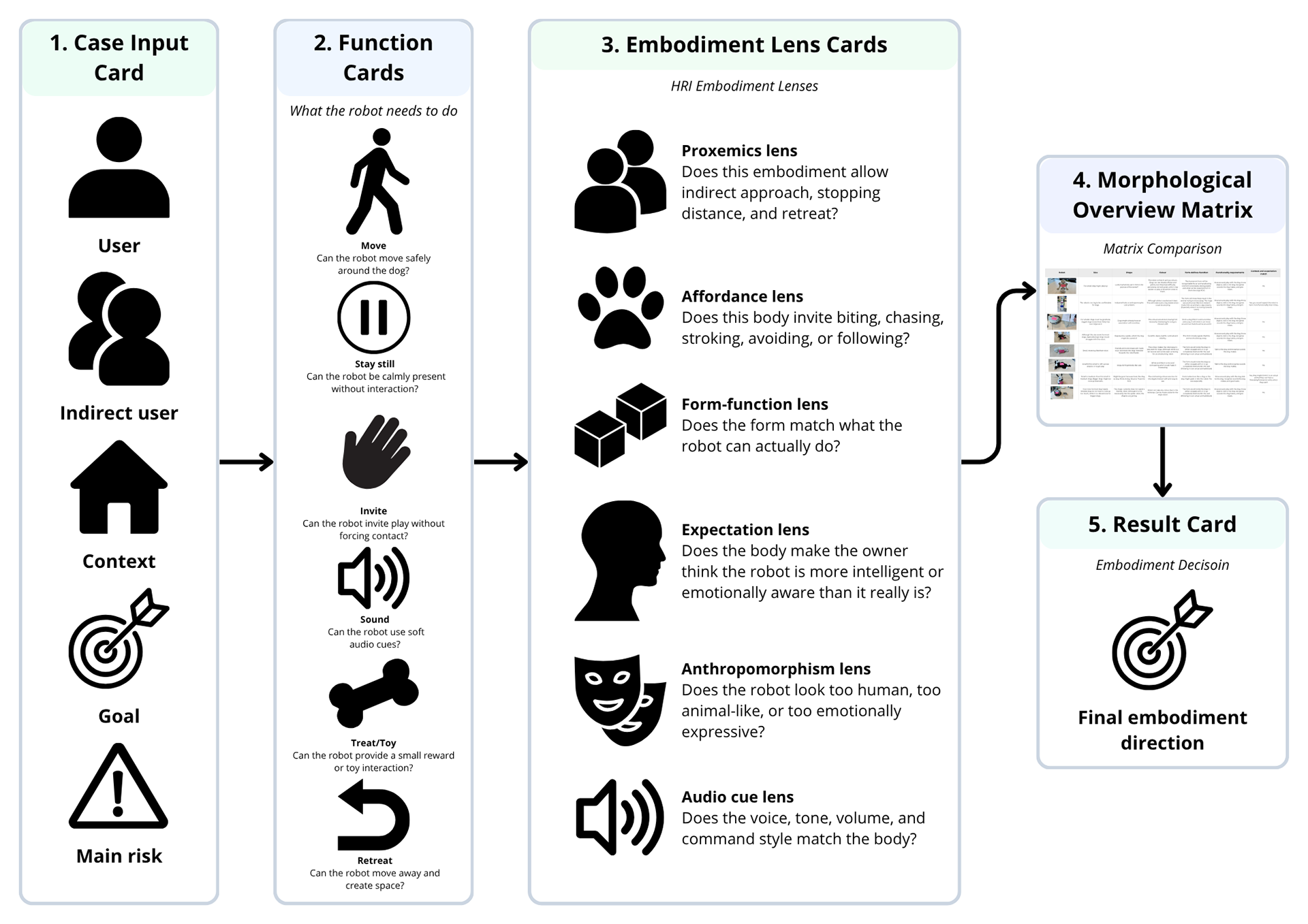
Figure 1. Conceptualisation - Embodiment Fit Tool structure.
5. Tool materials
The Embodiment Fit Tool consists of five materials, which are also shown in Figure 1.
The first material is the Case Input Card, which defines the target situation: an anxious dog in a small apartment interacting with a pet companion robot while the owner is away.
The second material is a set of Function Cards, which describe what the robot may need to do: move slowly, stay still, offer calm presence, invite play, make soft sounds, recognise simple sound cues, dispense treats or activate a toy, and retreat.
The third material is a set of Embodiment Lens Cards, which contain the HRI-specific checks used to judge each option: proxemics, affordances, form-function mapping, expectation mismatch, anthropomorphism, perceived capability, pet safety, and audio cue match.
The fourth material is the Morphological Overview Matrix, which compares possible embodiments using criteria such as size, shape, colour, form-defines-function, functionality requirements, and context/expectation match.
The fifth material is the Result Card, which records the final embodiment direction and the main reasons for choosing it.
6. HRI knowledge embedded in the tool
The tool embeds HRI knowledge in a structured way. It does not only ask whether an embodiment "looks nice"; it forces each option to be judged through HRI-specific lenses.
The first lens is a physical embodiment. Wainer et al. (2006) argue that physical embodiment can affect social interaction because a robot’s body shares the same space as the user. In our tool, this is operationalised by asking whether the application actually needs a body. For our pet case, physical embodiment is useful because the robot may need to occupy space, move away, offer a tangible toy or treat, and be physically present in the room. A purely screen-based agent would not provide the same spatial or tangible interaction.
The second lens is proxemics. Torta, Cuijpers, and Juola (2013) show that personal space can be modelled as an important factor in robotic social navigation. In our tool, proxemics is operationalised through a required distance check: every embodiment option must be judged on whether it can approach indirectly, stop before entering the pet’s close space, and retreat without blocking an escape route. This prevents the team from choosing a body that looks friendly from a human perspective but becomes too large, direct, or invasive from the dog’s perspective.
The third lens is form-function and expectation match. Goetz, Kiesler, and Powers (2003) show that people respond better when a robot’s appearance and behaviour match the task. In our tool, this is operationalised through the question: "What does this body make the user expect, and can the robot actually do that?" For example, a humanoid robot may suggest understanding, empathy, and flexible manipulation, but our pet companion robot cannot truly understand the dog's emotional state. Therefore, a humanoid embodiment would create an expectation mismatch.
The fourth lens is expectation setting. Paepcke and Takayama (2010) show that people's expectations of robot capability are influenced by how the robot is presented. In our tool, this is operationalised through a "promise versus capability" check. If the robot body suggests that the robot can talk, understand feelings, or behave like a real animal, the design must either support that capability or reduce the cue.
The fifth lens is affordance-centred embodiment. Paauwe, Hoorn, Konijn, and Keyson (2015) argue that affordances can matter more than realism or aesthetics in social robot embodiment. In our tool, this is operationalised by asking what each body invites the pet to do. Does it invite stroking, chasing, biting, avoiding, following, or ignoring? This was especially important in our matrix because some plush animal forms looked friendly to humans but might invite the dog to bite, carry, or treat the robot as a toy or prey object.
7. Application of the tool to our case
Inputs
The tool used the following inputs: our pet companion case, the available robot and toy embodiments from the course, the morphological overview matrix, and the design requirement that the robot should support an anxious dog without increasing arousal.
The key functional requirements were that the robot should be visible to the dog, safe to approach, able to move or remain still, able to give simple audio cues, possibly able to dispense a treat or activate a toy, and able to retreat. The key social requirements were that the robot should not look threatening, should not look like a real animal that invites attack, and should not look more intelligent or emotionally aware than it is.
Figure 2 shows the morphological overview matrix used during the session. The matrix compares the available robot and toy embodiments through size, shape, colour, form-defines-function, functionality requirements, and context/expectation match. Alan, the bottom custom wheeled robot, was selected as the most promising prototype base because it offers the most functional flexibility for our pet companion case. However, the matrix also shows that Alan's current form does not yet match the desired context and expectations, so the final design direction requires a softer, clearer, and more pet-friendly embodiment.
Options generated and compared
Using the matrix in Figure 2, we compared several available robot and toy embodiments. The small humanoid robot was rejected because it was too small and fragile for rough dog interaction, while its humanoid shape did not add useful meaning for the pet case. A dog does not need the robot to look like a small person.
The tall service robot was also rejected because its height and industrial appearance could make it uncomfortable for dogs. Its form suggests more intelligence and functionality than it may actually have, which creates an expectation mismatch for the human owner.
The Roomba-like embodiment was partly suitable because it is low and already familiar as a moving domestic object. However, it could also be associated with cleaning, noise, or avoidance, so it was not suitable as a complete pet companion embodiment.
The spider-like robot was rejected because its shape and leg movement could easily be read as threatening or unpredictable. For an anxious dog, this could increase avoidance or fear.
The plush seal, plush cat, and dog-like toy were partly suitable because they looked soft and/or approachable to humans. However, they also created a risk of being treated as toys, prey, or other animals. A dog might bite, carry, attack, or become confused by them, especially if the robot looks too much like a real animal.
Alan, the bottom custom wheeled robot, was selected as the most promising prototype base. Alan is a suitable size for most dog breeds, can move around, and can potentially support pet-facing functions such as play, sound recognition, simple audio cues, LED feedback, and treat-based interaction. However, the matrix also showed that Alan is not yet a good final embodiment. Its exposed technical structure and irregular shape do not clearly communicate a calm or friendly pet companion. Therefore, we selected Alan as the most adaptable starting point, but not as the final body design.
Made observations
The matrix in Figure 2 and the discussion made visible that many available robots are not suitable because they were designed for human interpretation, not for pet interaction. What looks cute, friendly, or expressive to a human may be confusing, threatening, or chewable for a dog.
The matrix also showed that embodiment cannot be separated from behaviour. A large robot might be acceptable if it never approaches the dog, while a small robot might still be threatening if it moves suddenly or directly. This means the embodiment tool must be linked to the expression and behaviour work from earlier sessions.
The most important observation was that the robot should not imitate a human or a real animal. A more abstract embodiment is safer because it lowers expectations. It can still be socially readable through movement, distance, rhythm, and simple audio cues, but it does not claim to be a dog, cat, or human companion.
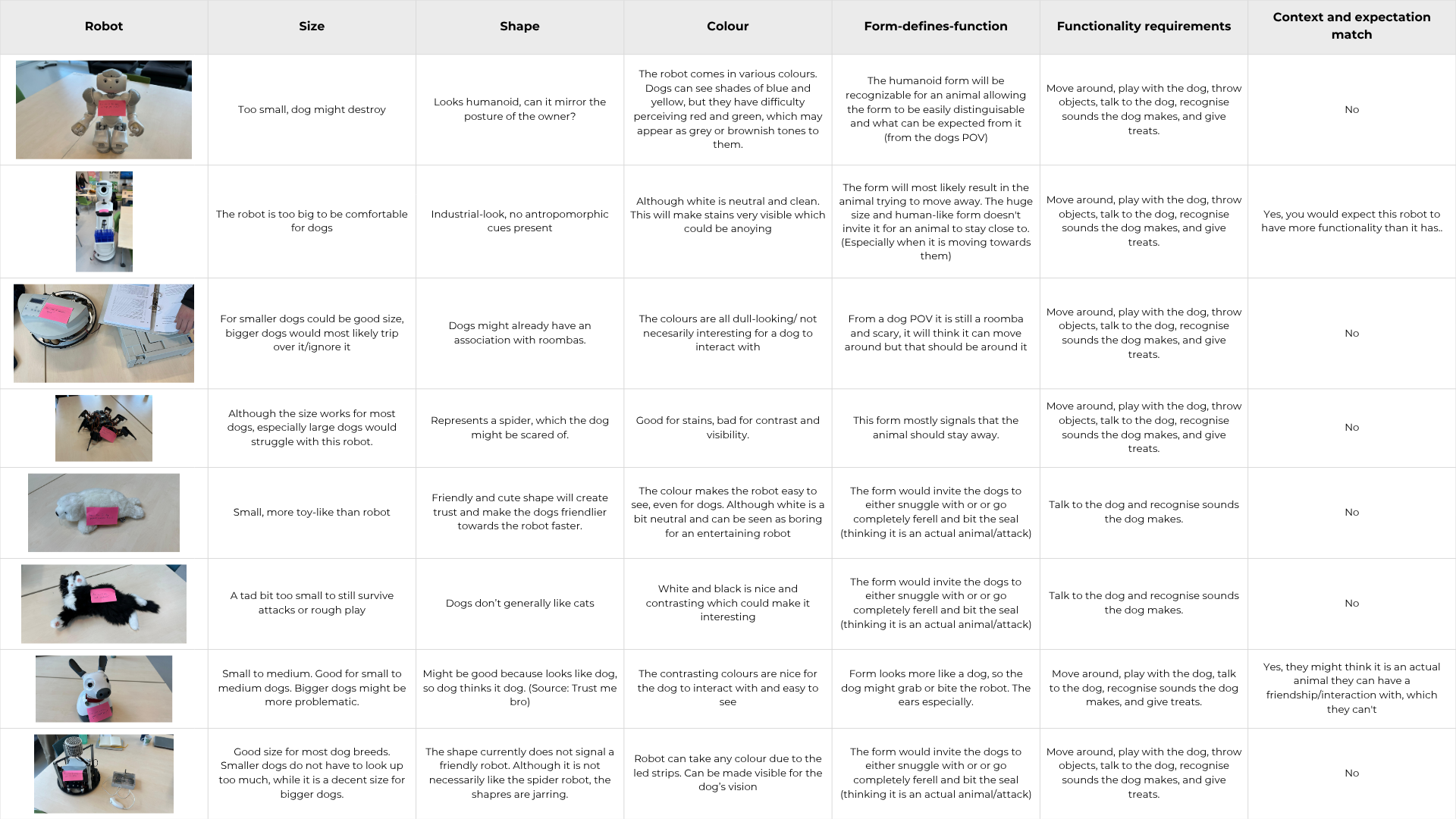
Figure 2. Realisation - Morphological overview matrix.
8. Design outcome
The selected embodiment direction is a modified version of Alan, the bottom custom wheeled robot from the matrix. We chose Alan because it is the most adaptable prototype base for our case: it has a workable size for most dog breeds, can move around, and can potentially support play, simple audio cues, sound recognition, LED feedback, and treat-based interaction.
However, Alan is not suitable in its current form. The matrix showed that its shape does not yet signal a friendly or calm pet companion. It looks technical, exposed, and unfinished, which may make it harder for both the dog and the owner to understand what kind of interaction to expect.
The final embodiment direction is therefore not simply "use Alan as it is." Instead, the outcome is to redesign Alan into a low, rounded, small-to-medium, non-humanoid pet companion robot. The robot should sit close to floor level so it does not tower over the dog. It should have a rounded or soft-edged outer shell to reduce threat and hide fragile technical parts. Its colours should be clearly visible to the dog, using stronger contrast such as blue and yellow rather than relying on red or green.
The robot should not look like a realistic dog, cat, seal, or baby animal. It may have subtle social cues, such as orientation, light, sound, or breathing-like movement, but it should not have large emotional eyes or a realistic face. This avoids overpromising emotional understanding.
The earlier audio design tool idea becomes one part of this embodiment outcome. The robot's body and voice should match: a calm, low, non-humanoid robot should not use an overly human, excited, or commanding voice. Its audio should be simple, low-arousal, and easy to test with dogs.
Figure 3 shows Alan as the selected prototype base and the intended redesign direction. The desired, and hopefully final, result is a low, rounded, visible, non-humanoid pet companion robot that can remain still, move slowly, invite interaction gently, give simple audio cues, dispense or activate a treat or toy, and retreat to create space. This result follows from the matrix because it keeps Alan's functional flexibility while reducing the risks of its current exposed, technical, and expectation-mismatched form.
The resulting embodiment direction is therefore: a redesigned version of Alan: low, rounded, visible, non-humanoid, pet-safe, calm in movement, and able to retreat.
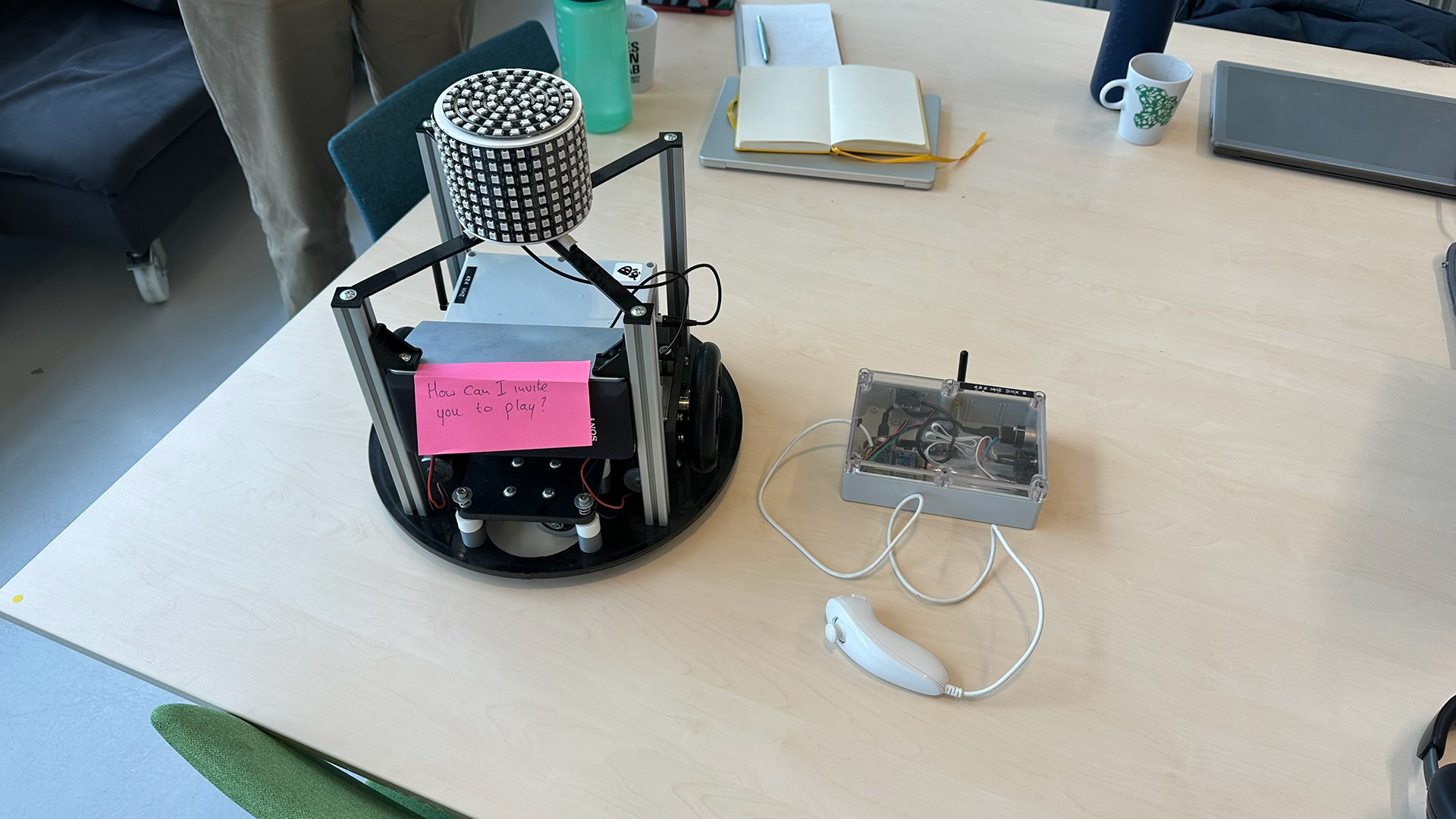
Figure 3. Result - Alan as the selected prototype base and final embodiment direction.
9. What changed in the case description
Before this session, the case focused mainly on reducing anxiety-related behaviour through modular interaction. After this session, the case became more specific in terms of embodiment.
The robot is no longer described as a general "pet companion robot." It is now described as a floor-level domestic companion object for an anxious dog. Its role is not to act like another pet or a human caretaker, but to provide controlled, low-pressure interaction moments.
The embodiment direction also changed the behaviour requirements. The robot should not always approach the dog. It should be able to do nothing, wait, remain present, or retreat. This connects directly to the expression session, where we learned that calmness is not only slow movement but also indirectness, pauses, low amplitude, and predictable timing.
The owner interface also changed. The robot should not report emotional certainty, such as "your dog is happy" or "your dog is calm." Instead, it should report observable behaviour, such as "your dog approached the toy twice" or "your dog moved away when the robot started moving." This avoids the expectation mismatch created by a socially expressive body.
10. Evaluation of the Embodiment outcome
The outcome is stronger than simply choosing one available robot. The matrix helped me/us reject embodiments that were attractive from a human perspective but risky for the pet case. It also helped us choose an abstract, low, functional embodiment rather than a humanoid or realistic animal form.
The strongest part of the outcome is the expectation match. The final robot body communicates limited social capability. It does not pretend to be a dog, cat, baby, or human. This is important because a robot that looks too emotionally intelligent may cause the owner to overtrust it.
The main weakness is that the evaluation was still done by human designers. We inferred what might be suitable for a dog, but we did not test the embodiments with dogs. Therefore, the outcome should be treated as a design direction, not as proof that the robot will be calming.
11. Evaluation of the tool quality
The Embodiment Fit Tool worked well as an early-stage design tool because it forced me/us to compare embodiment options systematically. It made the discussion more specific than simply saying that a robot looked cute, scary, friendly, or functional.
The tool was also useful because it connected embodiment to HRI concepts. Proxemics became a concrete distance and retreat question. Form-function mapping became a capability expectation question. Affordance became a question of what the dog might do with the body. This made the tool more HRI-specific than a generic product design moodboard.
However, the tool needs improvement. First, it should include weighted criteria, because safety and expectation match should count more heavily than colour or visual appeal. Second, it should include a pet behaviour expert or veterinarian in the evaluation session. Third, it should be tested with physical mock-ups, because a photograph or matrix does not show movement, noise, weight, smell, or durability. Fourth, the tool should include a "failure mode" step, where each embodiment is tested against what could go wrong: biting, blocking escape, startling, owner overtrust, or technical failure.
12. Reflection
This session changed my understanding of embodiment. I initially thought of embodiment mainly as the robot's shape or appearance. The session showed that embodiment is also about what the body affords, what it promises, and how it changes the meaning of behaviour.
For our pet companion case, the embodiment must be restrained. A more expressive or animal-like robot is not automatically better. In fact, too much realism could create confusion or unsafe interaction. The most suitable embodiment is probably more abstract: clear enough to be perceived as an interactive object, but not so lifelike that it invites the dog or owner to expect emotional understanding
The most important design insight is that embodiment should reduce uncertainty, not add to it. The robot should have a body that makes its role understandable: a calm, low-pressure, retreat-capable companion object. It should not look like a human, a replacement pet, or a highly intelligent emotional agent.
13. References
Amirova, A., Rakhymbayeva, N., Yadollahi, E., Sandygulova, A., & Johal, W. (2021). 10 years of human-NAO interaction research: A scoping review. Frontiers in Robotics and AI, 8, 744526. https://doi.org/10.3389/frobt.2021.744526
Goetz, J., Kiesler, S., & Powers, A. (2003). Matching robot appearance and behavior to tasks to improve human-robot cooperation. In Proceedings of the 12th IEEE International Workshop on Robot and Human Interactive Communication (pp. 55-60). IEEE. https://doi.org/10.1109/ROMAN.2003.1251796
Oruma, S. O., Sánchez-Gordón, M., Colomo-Palacios, R., Gkioulos, V., & Hansen, J. K. (2022). A systematic review on social robots in public spaces: Threat landscape and attack surface. Computers, 11(12), 181. https://doi.org/10.3390/computers11120181
Paauwe, R. A., Hoorn, J. F., Konijn, E. A., & Keyson, D. V. (2015). Designing robot embodiments for social interaction: Affordances topple realism and aesthetics. International Journal of Social Robotics, 7(5), 697-708. https://doi.org/10.1007/s12369-015-0301-3
Paepcke, S., & Takayama, L. (2010). Judging a bot by its cover: An experiment on expectation setting for personal robots. In Proceedings of the 5th ACM/IEEE International Conference on Human-Robot Interaction (pp. 45-52). ACM/IEEE. https://doi.org/10.1109/HRI.2010.5453268
Torta, E., Cuijpers, R. H., & Juola, J. F. (2013). Design of a parametric model of personal space for robotic social navigation. International Journal of Social Robotics, 5(3), 357-365. https://doi.org/10.1007/s12369-013-0188-9
Wainer, J., Feil-Seifer, D. J., Shell, D. A., & Matarić, M. J. (2006). The role of physical embodiment in human-robot interaction. In Proceedings of the 15th IEEE International Symposium on Robot and Human Interactive Communication (pp. 117-122). IEEE. https://doi.org/10.1109/ROMAN.2006.314404