Group work and Collaborators
This concept was developed during the third Social Robot Design session as part of Group 1. This session focused on expressive motion in social robot design. The assignment used a course-provided setup: an SO-ARM101 open-source robot arm controlled through TouchDesigner and a MIDI controller. The goal was not to design a new tool from scratch, but to use the expressive motion setup critically, document what it made visible, and reflect on how the movement vocabulary could apply to our own social robot design case.
Collaborators:
Maurits Dijkman, Bianca Filip, Ewoud Janus, Emilia Pavel, and Gijs Vis
My contribution:
I contributed to familiarising the group with the TouchDesigner setup, testing different mappings, observing the expressive effects of the robot arm, documenting the process through videos and screenshots, and connecting the motion observations to our pet companion robot case. I also helped translate the session outcomes into design implications for our modular pet anxiety toolkit.
1. Session context
The third session explored how social robots communicate through expression. Expression does not only mean facial expressions or speech. A robot can also communicate through movement, rhythm, timing, posture, sound, light, and stillness. The session showed that people often attribute intention to movement, even when the moving object is abstract and non-human.
This is important for Social Robot Design because a robot's behaviour is not interpreted only as a mechanical action. People often read motion socially: a movement can appear curious, hesitant, nervous, confident, playful, or threatening. The same function can therefore have different meanings depending on how it is performed.
This is directly relevant to our pet companion robot case. A dog or cat will not understand a verbal explanation of the robot's intention. The robot's movement has to communicate whether it is inviting play, keeping distance, waiting, retreating, or reacting. For an anxious pet, the expressive quality of movement may matter more than the technical function itself.
2. Connection to our case
Our case is a modular pet companion toolkit for exploring interactions that may support anxious domestic pets. In Session 1, we focused on the problem space and possible building blocks. In Session 2, we used scenario building to explore expectation mismatch and animal perspective. Session 3 adds the expressive motion layer.
The relevant case moment is:
A recently adopted dog is alone in a small apartment after the owner leaves. The pet companion robot is present in the room. It should invite gentle interaction without increasing anxiety. It may move a toy, show attention, create a small rhythmic motion, retreat, or stop when the dog avoids it.
The design challenge is not only what the robot does, but how the robot does it. A moving toy is not automatically playful. If it moves too fast or too directly, it may become threatening. A retreat motion is not automatically safe. If it is sudden, it may look startled and increase arousal. Therefore, expressive motion needs to be designed, observed, and tested.
The SO-ARM101 is not the final pet robot, but it functioned as a proxy for exploring expressive movement qualities such as speed, amplitude, posture, anticipation, rhythm, and retreat.
3. Tool and technical setup
The expressive motion setup consisted of three main parts, seen in Figure 1.
3.1 SO-ARM101 robot arm
The SO-ARM101 functioned as the expressive body. Although it is only a robot arm, it could still communicate through movement quality, timing, posture, and rhythm. The arm, therefore, acted as a simplified body for testing expressive motion.
3.2 TouchDesigner
TouchDesigner was used as the mapping environment. The node-based structure allowed us to connect controller input, generated motion, recorded movement, expressive overlays, and robot joint outputs. The robot expected six angle channels in degrees, corresponding to the six robot joints. This made the mapping structure important, because missing or wrongly routed channels changed the robot's posture and expression.
3.3 MIDI controller
The MIDI controller was used to move joints, trigger animations, change expressive settings, adjust breathing behaviour, record movement, and activate anticipation. This made the controller not just a technical input device, but part of the expressive performance system.
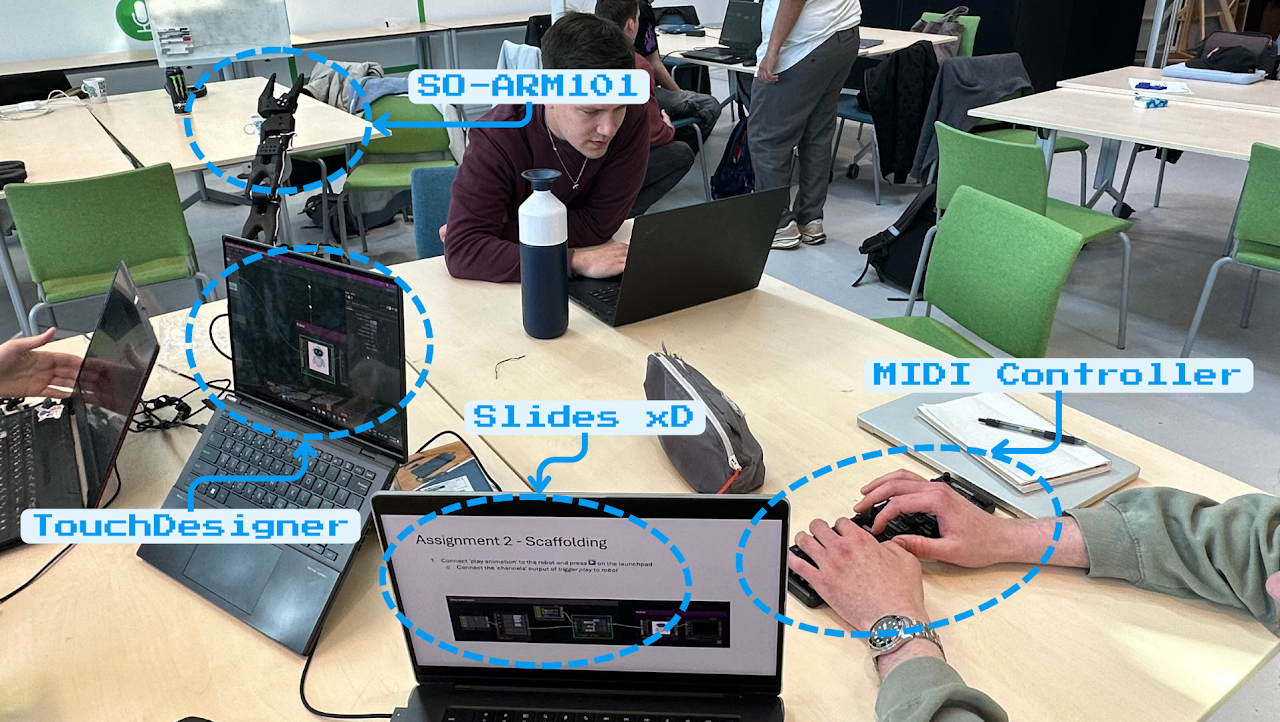
Figure 1. The setup for the workshop.
4. Structured observation framework
To document the session, I used the following observation framework for each assignment step. A lot of videos got corrupted or mixed up, so the videos used are not always as good as they were (intended to be).
1. What the tool asked us to do: The workshop instruction or task.
2. What the robot produced: The visible motion or behaviour of the arm.
3. What observers perceived: How the movement was interpreted by the group.
4. What this made visible: The design insight that was not obvious before the experiment.
5. Connection to our case: How the observation could apply to the pet companion robot.
6. Limits: Where the tool or movement vocabulary was not sufficient for our case.
This structure helped me move beyond describing what happened. It allowed the session to become an observation of expression, mapping, and interpretation.
5. Assignment 1 - Familiarisation: Direct slider control
Evidence
Video 1 shows the first familiarisation test with the SO-ARM101. The first six sliders of the MIDI controller directly controlled the six robot joints, making it possible to move the arm joint by joint. This video functions as the baseline condition before expressive overlays, breathing behaviour, recorded motion, or retargeting were added.
Figure 2 shows the TouchDesigner node network used for direct slider control. The MIDI controller input was routed to the robot angle channels, allowing the sliders to control the SO-ARM101 joints directly. This screenshot documents the technical mapping so the setup can be reproduced and compared with later expressive mappings.
What the tool asked us to do
The first assignment asked us to connect the direct slider control to the robot and move the first six sliders to control the robot joints. This was mainly a familiarisation task: we had to check whether the robot, controller, and TouchDesigner patch were connected correctly.
What the robot produced
The robot moved joint by joint. Each slider affected one joint, so the movement was technically understandable but fragmented. The motion looked like a machine being manually operated rather than a coherent, expressive body.
What observers perceived
Observers perceived the motion as functional and mechanical. The robot did not seem to have a clear intention (other than shaking the hand), mood, or character. This was because the motion came from individual joint control rather than coordinated whole-body expression.
What this made visible
This assignment made visible that direct control of degrees of freedom is not the same as expressive control. A robot can be movable without being expressive. Expression requires coordination between joints, timing, rhythm, posture, and the shape of the movement.
Connection to our case
For the pet companion robot, this means that controlling individual modules is not enough. A moving tail, toy, or arm only becomes socially meaningful when its movement is coordinated and legible. If each module moves independently, the robot may appear unpredictable or confusing to an anxious pet.
Limits
Direct slider control is useful for technical testing, but it is too difficult to use as an expressive performance method. It depends heavily on operator skill and does not automatically create readable motion.
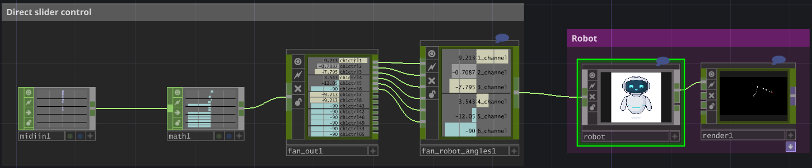
Figure 2. TouchDesigner direct slider mapping.
6. Assignment 2 - Scaffolding: Expressive overlay, posture, and breathing
Evidence
Video 2 shows the same base animation with different expressive overlay settings. The happy setting produced larger overshoots, the sad setting produced slower and more damped movement, and the default setting followed the original movement more closely. This video demonstrates how the same movement can be interpreted differently when timing, damping, and overshoot are changed.
Video 3 shows how adding posture control changed the meaning of the same movement. A downward tilt made the robot appear more tired, hesitant, or submissive, while an upward orientation made it seem more alert or curious. This video shows that expression is not only produced by movement speed, but also by body posture.
Video 4 shows the rhythmic breathing layer added to the robot's movement. Low-amplitude breathing made the robot appear more alive and present, while higher-amplitude breathing risked making the motion look nervous or unstable.
Figure 3 shows the first scaffolding step, where a pre-recorded animation is triggered and sent directly to the robot. The network routes MIDI input through the fan-out and trigger-play operators to the robot output. It shows the baseline animation routing before expressive overlays or additional motion layers were added.
Figure 4 shows the expressive overlay added between the triggered animation and the robot output. This network changes the movement quality of the same animation through parameters such as damping, overshoot, and tracking behaviour. It shows how the happy, sad, and default movement qualities were technically produced.
Figure 5 shows the next scaffolding step, where manual posture and head-tilt control were added to the expressive overlay. The additional control layer allowed the same animation to be shaped through orientation and posture. This made it possible to test how downward or upward tilt changed the perceived expression of the robot.
Figure 6 shows the final scaffolding step, where rhythmic breathing behaviour was added to the movement pipeline. The breathing layer was combined with the expressive overlay and posture control before being sent to the robot. This shows how a subtle periodic motion was layered on top of the existing animation to make the robot appear more alive.
What the tool asked us to do
Assignment 2 asked us to build up the expression step by step. We first connected a pre-recorded animation to the robot. Then we inserted the expressive overlay between the animation and the robot output, so the same movement could be modified into different expressive qualities. After that, we added posture and head-tilt control. Finally, we added breathing behaviour as a rhythmic background motion.
This scaffolding process is shown across Figures 2-5. Figure 2 shows the baseline play-animation routing. Figure 3 shows the expressive overlay added to the animation. Figure 4 shows the added posture and head-tilt control. Figure 5 shows the breathing behaviour added as the final expressive layer.
What the robot produced
The robot produced different expressive versions of the same base animation. With the default setting, the robot followed the animation closely and accurately. With the happy setting, the motion became more energetic because of larger overshoots and more lively timing. With the sad setting, the movement became slower and more damped.
When posture and head tilt were added, the same movement changed meaning. A downward tilt made the robot appear more tired, hesitant, or submissive. An upward orientation made the robot appear more alert or curious. When breathing behaviour was added, the robot produced a small repeated background movement, which made the arm appear more alive even when it was not performing a clear functional action.
What observers perceived
Observers perceived the happy setting as more lively, playful, and energetic. The sad setting was less immediately clear when only the overlay was used. It became more convincing when combined with a downward posture. This showed that motion timing alone was not enough to communicate a specific emotional quality.
The breathing behaviour was perceived as adding aliveness or presence. A subtle breathing rhythm made the robot seem awake and active, while a stronger rhythm risked making the robot look nervous, unstable, or exaggerated.
Overall, observers perceived the robot differently depending on how the layers were combined. The same base animation could become playful, hesitant, sleepy, or alert depending on the overlay, posture, and rhythmic motion.
What this made visible
This assignment made visible that expression is layered. Expression is not only produced by the final pose or by the robot's function. It emerges from the combination of trajectory, speed, damping, overshoot, posture, rhythm, and timing.
The exercise also showed that emotional labels such as happy or sad are not automatically created by one parameter. For example, slowing down the movement did not automatically make the robot appear sad. The sad interpretation became stronger only when the slower motion was combined with a downward or lowered posture.
The breathing layer made visible that idle motion can communicate presence. A robot that is completely still may appear inactive or switched off, while a robot with subtle rhythmic motion may appear more alive. However, too much rhythmic motion can also become distracting or unsettling.
Connection to Laban movement qualities
The expressive overlay can be described using Laban effort qualities. The most relevant dimensions in this assignment were time, weight, space, and flow.
The first quality is time, which can range from sustained to sudden. In the workshop, this was visible in the difference between slow, damped motion and quicker movement with overshoot. Sustained timing could make the robot appear sad, calm, or delayed, while more sudden timing could make it appear excited or startled.
The second quality is weight, which can range from light to strong. Gentle movement made the robot appear softer or more careful, while stronger overshoot made the movement appear more playful, heavy, or forceful.
The third quality is space, which can range from direct to indirect. When the robot oriented itself directly towards the object, it appeared more focused or curious. Softer or less direct movement made the robot appear more hesitant.
The fourth quality is flow, which can range from bound to free. Accurate tracking made the robot appear more mechanical or careful, while looser expressive motion made it appear more lively.
This vocabulary helped describe the movement more precisely than simply saying that the robot looked "happy" or "sad." It also helped identify which movement qualities might be useful or risky for our pet companion robot.
Connection to our case
For the pet companion robot, this assignment showed that "calm" should not simply mean "slow." Calm interaction would probably require a combination of low amplitude, predictable timing, indirect approach, soft posture, long pauses, and a clear retreat option. A slow but direct movement towards an anxious pet could still feel threatening.
The breathing behaviour is also relevant to our case. A very subtle breathing-like movement could make the pet companion robot appear present without actively approaching the pet. This might be useful when the robot is in the room, but should not initiate interaction yet. However, the rhythm would need to be tested carefully. If the movement is too large or repetitive, it may attract too much attention or make the robot seem unstable.
Posture is also important for the pet case. A lowered or less direct posture may feel less invasive than an upright or forward-leaning posture. For an anxious dog, the robot should avoid looming, sudden orientation changes, or direct movements into the pet’s personal space.
Limits
The expressive overlay was useful for exploring motion qualities, but its emotional categories were limited. The labels happy, sad, and default were easy to understand, but they may not be the most useful labels for our case. For a pet companion robot, more relevant categories would be calm, inviting, avoidable, predictable, startling, or threatening.
Another limitation is that the SO-ARM101 is only a robot arm. It does not have a full body, face, ears, tail, fur, locomotion, or soft material. Therefore, the expression had to come mainly from motion and posture. This made the exercise useful for isolating motion quality, but it also means the results cannot be copied directly to the final pet robot.
Finally, the observers were human. Human observers can interpret a downward tilt as sad or a rhythmic movement as breathing, but a dog or cat may not interpret these movements in the same way. For our case, the expressive vocabulary from this assignment should be treated as a starting point for later pet-safe testing, not as proof that the robot will calm an anxious animal.
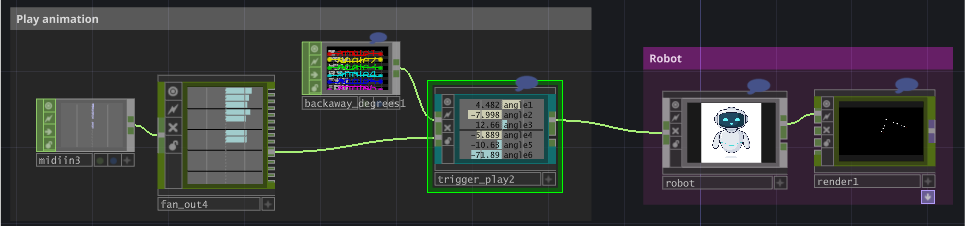
Figure 3. TouchDesigner play-animation network.
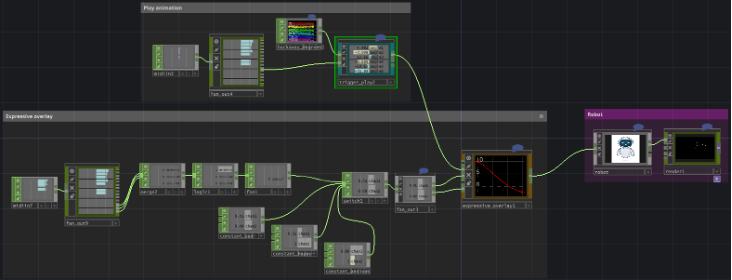
Figure 4. TouchDesigner expressive-overlay network.
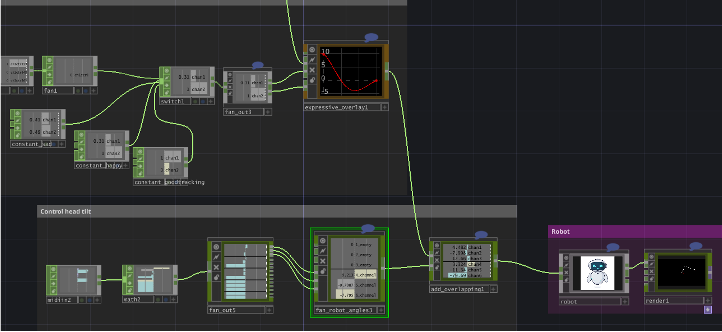
Figure 5. TouchDesigner posture and head-tilt network.
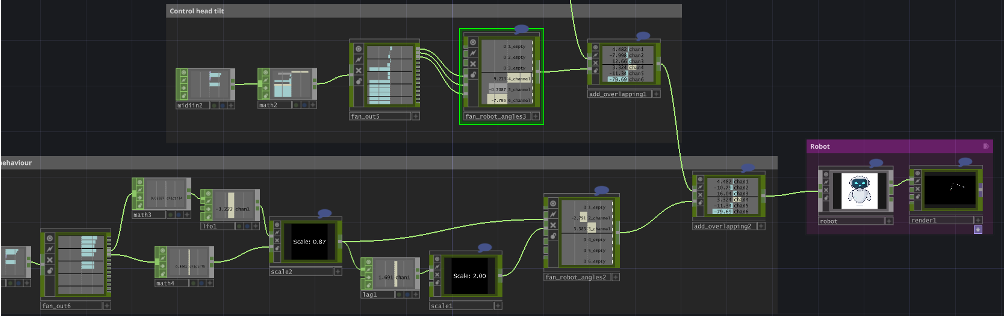
Figure 6. TouchDesigner breathing-behaviour network.
7. Assignment 3 - Recording and Anticipation
Evidence
Video 5 shows movement recorded by physically puppeteering the robot arm and replaying the recorded joint trajectory. The recording captured more organic timing than direct slider control because the movement was first shaped by hand rather than produced only through individual sliders.
Figure 7 shows how the recorded movement and expressive overlay were connected to the robot output. This screenshot documents the technical setup used to record, replay, and modify the puppeteered motion.
What the tool asked us to do
The workshop asked us to disable the robot torques, physically move the robot arm, record the joint positions, re-enable the torques, replay the recorded movement, and experiment with anticipation by holding and releasing a button. Figure 6 shows the TouchDesigner network used for this step, where the recorded motion and expressive overlay were routed to the robot output.
What the robot produced
As shown in Video 5, the robot replayed a human-generated motion path. Compared with direct slider control, the movement felt smoother and more continuous because it came from a physically puppeteered gesture. It shows the second part of the assignment, where anticipation added a preparatory pull-back before the robot moved to its target.
What observers perceived
Observers perceived the recorded movement in Video 5 as more organic and character-like than the earlier direct slider control. It felt less like separate joints being operated on and more like one body performing a gesture. In Video 5, the anticipation made the action easier to read because the robot seemed to prepare before acting. However, when the pull-back was too strong, the robot looked startled or nervous.
What this made visible
This assignment made visible that puppeteering can be used as a design method. Instead of programming an expression from scratch, designers can physically perform candidate movements and later replay, analyse, or adapt them. Video 5 demonstrates this clearly because the recorded motion retained some of the timing and continuity of the human puppeteering action.
The assignment also showed that anticipation is important for legibility. Video 5 shows that a movement with a small preparatory action is easier to read than a movement that begins suddenly. A movement that happens without preparation can feel mechanical or abrupt, while a small pull-back can make the robot seem intentional.
Connection to animation principles
The anticipation function connects to classic animation principles. In animation, anticipation prepares the viewer for an action and makes the action easier to understand. The same principle applies to robot motion. In Video 5, the robot's pull-back made the following movement more readable because observers could see that an action was about to happen before the robot moved to its target.
Connection to our case
For the pet companion robot, anticipation could be useful before activating a toy or moving closer. A small preparatory motion could signal that something is about to happen, reducing the chance of startling the pet. However, the movement in Video 5 also shows a risk: if the pull-back is too large or too sudden, it may look like a startle response and increase the pet’s arousal. For an anxious animal, anticipation should therefore be very small, slow, and predictable.
The recorded movement shown in Video 5 is also relevant to our case because it suggests a way to create candidate motion primitives for the pet companion robot. Instead of programming movement only from technical parameters, designers could physically puppeteer gentle invitation, retreat, pause, or attention movements and then use those recordings as starting points for later refinement.
Limits
Human-puppeteered movement may feel expressive to human observers, but it does not guarantee that a pet will interpret it as safe. Video 5 shows that puppeteering can create more organic motion, and it shows that anticipation can improve legibility for human observers. However, animal-facing validation would still be needed before using these motions in a real pet companion robot.
Another limitation is that Figure 6 documents a technical mapping for the robot arm, not a complete interaction system for a pet-facing robot. The method is useful for generating and comparing candidate motions, but it would need to be adapted with pet-safe speed limits, distance rules, escape routes, and observation of animal behaviour.
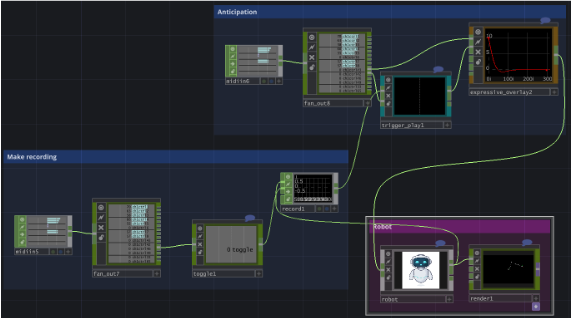
Figure 7. TouchDesigner record and anticipation network.
8. Assignment 4 - Retargeting
Evidence
Video 6 shows the same recorded movement being played from different starting configurations. The expressive character of the motion remained recognisable while adapting to the current robot pose.
Figure 8 shows the retargeting operator and the connections used to adapt the recorded motion to the robot's current position. This screenshot documents how the recorded movement was routed through the retargeting setup before being sent to the robot output.
What the tool asked us to do
The workshop asked us to load a recorded movement, connect it to the retarget operator, trigger it from different starting poses, and observe whether the dynamic content of the movement was preserved. Figure 7 shows the TouchDesigner setup used for this part of the assignment.
What the robot produced
As shown in Video 6, the robot performed a similar expressive gesture from multiple initial poses. The movement was not identical each time, because the starting configuration changed, but the general dynamic quality of the gesture was preserved.
What observers perceived
Observers could still recognise the movement in Video 6 as the same type of gesture, even though the starting pose changed. This made the motion feel more flexible and less like a fixed animation. Instead of looking like a pre-recorded movement that only worked from one exact position, the gesture appeared more adaptable.
What this made visible
Retargeting made it visible that expressive gestures need to be adaptable. A fixed animation is limited because real interactions do not always start from the same body configuration. Video 6 shows that retargeting can support reuse while preserving expressive qualities such as timing, direction, and general motion character.
This was useful because it showed that expressive motion is not only about designing one good movement. It is also about designing a movement system that can adapt the same expressive idea to different starting conditions.
Connection to our case
For the pet companion robot, this is important because the robot may be in different positions relative to the pet. A "gentle retreat," "slow invitation," or "startled pause" should still work when the robot starts from different poses, distances, or orientations. Retargeting could help preserve a motion's expressive meaning while adapting it to the current context.
For example, if the robot needs to retreat because the pet moves away, the retreat should remain slow and respectful, whether the robot starts near a toy, near the wall, or closer to the pet. The principle shown in Video 6 could therefore help make expressive pet-robot behaviours more reusable.
Limits
Retargeting preserves motion dynamics, but it does not automatically preserve social meaning. A movement that is safe from one starting position might be threatening from another if it blocks the pet's escape route, moves too close, or approaches from the wrong direction.
Figure 7 shows the technical retargeting setup for the robot arm, but the pet companion robot would need additional context rules. For example, it should know where the pet is, where the safe spaces are, and whether the movement would reduce or increase distance. Therefore, retargeting is useful for adapting expressive motion, but it must be combined with spatial awareness and safety constraints in the final pet-facing system.
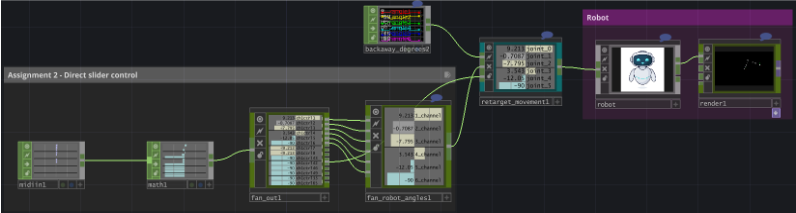
Figure 8. TouchDesigner retargeting setup.
9. Final Project - Leaning in for a Closer Look
Evidence
During the session, there was not enough time to fully work on and test this final assignment with the robot arm. Because this workshop was the only moment in the course where we could use the robot arms, Mr Dertien indicated that we were allowed to skip this final project if necessary. We did combine parts of the visual coding setup, but we could not test the complete sequence on the physical robot.
What the tool asked us to do
The final project asked us to act out the following script as well as possible:
The robot lazily wakes up, notices an object in front of it, approaches it to take a closer look, becomes startled, and backs away in fear.
The assignment encouraged us to combine autonomous, triggered, and manual control to create a more lively, expressive performance. This could include expressive layers such as breathing, altered motion characteristics, manual overlays, and recorded movements.
In our case, we started combining the visual coding needed for this sequence, but we did not have enough time to test the full result on the robot arm. Therefore, this part should be read as a planned and partially prepared expressive sequence rather than a fully validated performance.
What the robot produced
Because the final sequence was not tested on the physical robot, we cannot claim that the robot produced a complete final performance. The intended motion sequence would have included several distinct expressive qualities: slow waking motion, subtle rhythmic aliveness, attentive pause, careful leaning in, sudden startled reaction, and backward retreat.
However, since the sequence was not executed and observed on the robot, these remain design intentions rather than tested results.
What observers perceived
Because the final project was not fully tested, we did not collect observer responses for the complete sequence.
Based on the earlier assignments, we expected that observers would probably read the slow start and breathing as sleepy or alive, the pause before leaning in as curiosity, and the sudden retreat as fear or surprise.
However, this remains an expectation based on previous exercises, not an observed result from the final project itself.
However, this remains an expectation based on previous exercises, not an observed result from the final project itself.
What this made visible
This incomplete final assignment still made something important visible: creating an expressive robot sequence requires more than writing a script. The movement has to be built from separate layers, such as breathing, posture, timing, manual control, recorded movements, and triggered responses. Even a short narrative like "wake up, notice, lean in, get startled, retreat" quickly becomes technically complex.
The limitation also showed that expressive motion design depends strongly on testing with the actual robot body. A motion that looks clear in visual coding may feel too fast, too small, too mechanical, or unclear when performed physically.
Connection to our case
We reinterpreted the planned final sequence for our pet companion case:
The robot is present in the room with an anxious pet. It wakes up slowly, notices the pet or a toy, leans in with curiosity, becomes startled by sudden pet movement, and retreats to create space.
This sequence suggests useful motion primitives for our pet robot: calm idle, soft attention, gentle invitation, uncertainty pause, and respectful retreat.
However, the pet version would need reduced speed, reduced amplitude, a less direct approach, and more distance than the workshop version. What reads as expressive to human observers could still be too intense for an anxious animal. For this reason, the most relevant part for our case is not the dramatic startled motion, but the idea of respectful retreat: when the pet reacts unexpectedly, the robot should stop, reduce stimulation, and create space.
Reflection on the limitation
Although we could not complete and test the final project, this limitation is important to document honestly. The session time was mainly used to familiarise ourselves with the robot arms, test expressive overlays, record movement, and explore retargeting. Because the physical robot arms were only available during the workshop, the available time had to be divided between all assignments.
For the portfolio, this means that the earlier assignments provide the main tested evidence for expressiveness, while this final project remains a partially prepared concept. In the next iteration, I would test the full sequence on the robot arm, record it on video, and compare observer interpretations of each movement phase: waking up, noticing, leaning in, startled response, and retreat.
10. Laban movement analysis of the Final Sequence
Because the final sequence was not recorded or tested on the physical robot, this section is not an analysis of observed movement. Instead, it is a Laban-based analysis of the planned expressive sequence. We use Laban movement qualities, space, weight, time, and flow, to describe how the intended motion could be designed and what risks it might create for our pet companion case.
The first planned moment was waking up. The intended expression was sleepy and low-energy. In Laban's terms, this would use indirect space, lightweight, sustained time, and relatively free flow. A slow rising motion and subtle breathing layer could make the arm seem alive without making it look highly active.
The second planned moment was noticing. The intended expression was curiosity or attention. This would use more direct space because the robot would orient towards the object. It would still use lightweight and sustained time, but the flow would become more bound because the movement should appear more controlled. The orientation and pause would help communicate that the robot has noticed something.
The third planned moment was leaning in. The intended expression was careful inspection. This would use direct space, light weight, sustained time, and bound flow. However, this movement also shows a possible risk for our pet companion case. If a robot leans in too directly, the same motion could feel invasive or threatening to an anxious animal.
The fourth planned moment was the startled response. The intended expression was surprise or fear. This would use direct space, stronger weight, sudden time, and bound flow. This type of movement would probably be readable to human observers, but it could easily become exaggerated. For an anxious pet, a sudden startled movement might increase arousal instead of creating safety.
The final planned moment was backing away. The intended expression was fear or retreat. This would use indirect space, light weight, sudden-to-sustained time, and bound flow. This movement is the most useful for our pet companion case because it creates distance. However, for a real pet-facing robot, the retreat should probably be slower and less dramatic than in an expressive workshop sequence.
This analysis helped translate the planned motion into a more structured vocabulary, even though we could not test the full sequence. The most useful Laban categories for our case were space and time. Directness and suddenness strongly affect whether a movement seems curious, threatening, or startled. In the next iteration, the planned sequence should be tested on the robot arm and recorded, so the Laban analysis can be compared with actual observer interpretations.
11. What the tool made visible
The expressive arm workshop made several things visible that were not clear from the earlier sessions.
11.1 Expression is a mapping problem
The robot arm had physical degrees of freedom, but expression depended on how those degrees of freedom were mapped to controller inputs, overlays, recordings, and triggered behaviours. Direct sliders produced movement, but not necessarily expression. Coordinated mappings produced more readable motion.
11.2 Expression is a timing problem
The final pose was less important than how the robot got there. Preparation, acceleration, pause, rhythm, overshoot, and recovery all shaped the perceived expression. The anticipation operator made this especially clear.
11.3 Expression is interpreted socially
Observers read the robot as waking, noticing, becoming curious, being startled, and backing away. This happened even though the robot arm had no face, speech, or animal-like appearance. This supports the idea that overt behaviour can matter as much as shape.
11.4 Expression can overpromise
If the robot appears curious or afraid, observers may assume that it understands the situation. This is risky in HRI. A movement that looks socially intelligent can create expectations that the system cannot technically fulfil.
12. Where the tool's vocabulary reached its limits
The expressive motion setup was useful, but it also had limits.
12.1 Human observer bias
Most observations came from human interpretation. Human observers are good at reading intention into motion, but pets may not interpret the same movement in the same way. A movement that looks gentle to a human may still be too direct or too close for a dog.
12.2 Limited embodiment
The SO-ARM101 is an arm, not a full pet-facing robot. It lacks locomotion, soft materials, tail, ears, fur, sound design, smell, and whole-body posture. Therefore, it can test some expressive motion qualities, but not the full embodiment of a pet companion robot.
12.3 Laban describes movement, not meaning
Laban's effort qualities help describe how a motion is performed, but they do not guarantee what the motion means in a specific context. "Light, sustained, indirect motion" may sound calm, but a real pet may still avoid it if the robot is too close, too loud, or unfamiliar.
12.4 Mechanical constraints remain visible
The robot's servo movement, stiffness, and mechanical sound influenced the perceived expression. Even when the motion was intended to be soft or alive, the mechanical qualities of the arm sometimes made the motion seem artificial.
12.5 The tool focuses mainly on motion
The workshop focused on expressive motion. Our pet companion case also needs sound, light, material, smell, distance, owner communication, and safety. Motion is important, but it is only one expression modality.
13. Applicability to our pet companion case
13.1 Aspects that apply directly
The tool applies directly to our case in several ways.
First, it helps design non-verbal communication. A pet companion robot cannot rely on speech. It needs motion to communicate attention, invitation, hesitation, retreat, and stopping.
Second, it helps test motion quality before autonomy is solved. A human operator can puppeteer candidate movements, record them, compare them, and later translate them into motion primitives.
Third, it supports the design of safe interaction. The workshop showed that retreat, pausing, slowing down, and reducing amplitude can be designed as expressive behaviours rather than only safety mechanisms.
Fourth, it helps make movement reproducible. Videos, recordings, screenshots, and mapping documentation make it possible to compare different expressive versions.
13.2 Aspects that do not apply directly
The tool does not directly answer whether a pet will actually feel calmer. Human observers can judge motion expressiveness, but pet-facing validation is still needed.
The robot arm also does not match the final embodiment of the pet companion robot. The pet robot may need a soft body, a moving toy, a tail, or a mobile base. Therefore, the expressive vocabulary must be translated rather than copied.
Finally, the tool does not automatically include animal welfare criteria. For our case, the observation framework should be expanded with animal-specific signals such as retreat, freezing, barking, hiding, sniffing, voluntary approach, and disengagement.
13.3 What would need to change
To adapt the tool to our case, I would change it in the following ways:
1. Replace emotion labels such as happy and sad with pet-relevant interaction qualities such as calm, inviting, startling, threatening, avoidable, and predictable.
2. Add an animal welfare observation sheet.
3. Test motion from a low pet perspective, not only from a standing human perspective.
4. Include distance and escape routes as part of the motion evaluation.
5. Reduce speed, amplitude, and suddenness for anxious-pet scenarios.
6. Add sound and material observations, because mechanical noise and surface texture may influence pet response.
7. Compare human observer interpretation with actual animal behaviour in later testing.
14. Design implications for the Pet Anxiety Toolkit
Based on this session, the pet companion toolkit should include an expressive motion vocabulary.
14.1 Calm idle
A low-amplitude rhythmic motion that makes the robot appear present but not demanding attention. This could be similar to breathing, but it should be subtle enough not to overstimulate the animal.
14.2 Soft attention
A small orientation movement towards the pet or toy, followed by a pause. This signals awareness without immediately approaching.
14.3 Gentle invitation
A slow, indirect movement of a toy or module. The pet should be able to choose whether to approach. The robot should not move directly into the pet's space.
14.4 Uncertainty pause
A deliberate pause when the robot cannot confidently interpret the pet's behaviour. This prevents the robot from escalating interaction based on unclear signals.
14.5 Respectful retreat
A slow movement away from the pet when the pet avoids, freezes, or retreats. This should create space without looking startled or unstable.
14.6 Startle suppression
A rule that prevents sudden high-amplitude motion when the pet is already anxious. The robot should avoid fast, direct, or noisy movement during sensitive moments.
15. Reflection
This session changed how I think about the Pet Anxiety Toolkit. In Session 1, I mainly thought about the toolkit as a collection of modules: a treat dispenser, moving tail, sound module, light module, or toy mechanism. After the expression session, it became clear that the expressive qualities of those modules may be more important than the modules themselves.
A moving toy is not automatically playful. If it moves suddenly, directly, or too close to the pet, it may become frightening. A retreat motion is not automatically calming. If it is too sudden, it may look startled and increase arousal. A breathing motion can make the robot seem alive, but if it is too large or repetitive, it may become distracting or suspicious.
The most useful insight was that "calm" is not a single setting. Calm movement probably requires a combination of low amplitude, slow timing, indirect approach, long pauses, reduced sound, and optional interaction. For an anxious pet, a robot should often wait, pause, or retreat rather than actively perform.
The session also showed that expressive behaviour can be designed before autonomy is solved. A human puppeteer can create candidate movements, record them, and compare them. These movements can later become motion primitives or behavioural requirements for the robot. This fits the course focus on design tools: the expressive arm setup is not just a technical robot demo, but a way to discover, compare, and specify expressive robot motion.
However, I should not overclaim the results. The workshop tells us how human observers interpret the robot arm, not how pets will respond to the final robot. The next step should be to adapt the observation framework for animal behaviour and test very simple movements with pet-safe prototypes. The goal should not be to make the robot look emotionally expressive to humans, but to make its behaviour safe, predictable, optional, and understandable for the animal.
16. HRI and Literature Grounding
This session connects to several areas of academic literature on perception, expressive robot motion, Laban movement analysis, animation principles, and puppeteering.
First, the session connects to research on how humans perceive intention in movement. Heider and Simmel (1944) showed that people can attribute intentional or social behaviour to simple moving geometric shapes. This supports what we observed during the workshop: even though the SO-ARM101 has no face, eyes, or speech, observers still described its movement as waking up, noticing, becoming curious, being startled, or retreating. Johansson's work on biological motion also shows that humans are sensitive to movement patterns and can recognise meaningful motion from limited visual information (Johansson, 1973). Together, these papers support the idea that motion alone can carry social meaning.
Second, the session connects to expressive robot motion. Hoffman and Ju (2014) argue that robot movement should be treated as a central part of interaction design, not as a decorative layer added after the technical behaviour is finished. This matches our observations in Assignment 2 and the final project: the same basic movement changed meaning when timing, damping, overshoot, posture, and breathing behaviour were changed. For example, the "sad" movement only became more convincing when slower motion was combined with a downward posture. This shows that expression is not only about what the robot does, but also about how the robot moves.
Third, the session connects to Laban-based movement analysis. Knight and Simmons (2014) use Laban Effort features to describe expressive robot motion through qualities such as space, weight, time, and flow. This was useful for analysing the final expressive sequence. In our case, the most useful dimensions were space and time. Direct movement towards the object made the robot appear focused or curious, but it could also become invasive. Sudden timing made the startled response readable, but it could also become too intense for an anxious pet. Laban vocabulary, therefore, helped describe the motion more precisely than simple labels such as "happy" or "sad."
Fourth, the session connects to animation principles and robot readability. Lasseter (1987) explains how traditional animation principles can be applied to computer animation, including principles such as anticipation. Takayama, Dooley, and Ju (2011) apply animation principles directly to HRI and show that anticipation and reaction can make robot behaviour more readable. This connects to Assignment 3: the anticipation function made the robot's movement easier to understand because the pull-back prepared observers for the following action. However, for our pet companion case, this principle must be used carefully. Too much anticipation could look like nervous movement or startle behaviour, which may increase arousal in an anxious animal.
Fifth, the session connects to robot theatre and puppeteering. Knight (2011) discusses how robot theatre reveals lessons about non-verbal interaction, embodiment, gesture, emotional expression, and audience interpretation. This supports the use of puppeteering as a way to explore expressive motion before autonomy is solved. Chen, Xing, Tay, and Yeo (2005) also show how puppetry and robotic marionette control can be understood as a technical and expressive control problem. This relates to the TouchDesigner setup because expressive motion depended not only on the robot arm, but also on the controller mapping, overlays, recording, retargeting, and the performer's control.
Overall, the literature supports the idea that expressive robot motion should be deliberately designed, observed, and evaluated. The session showed that movement can communicate intention and emotional tone, but it can also create expectations. A robot that moves socially may be perceived as more aware or capable than it actually is. For our pet companion case, this means the robot should avoid overpromising emotional understanding. The robot may use expressive motion to invite, pause, or retreat, but it should not pretend to know that the pet is calm, happy, or anxious without stronger evidence.
17. References
Chen, I. M., Xing, S., Tay, R., & Yeo, S. H. (2005). Many strings attached: From conventional to robotic marionette manipulation. IEEE Robotics & Automation Magazine, 12(1), 59-74. https://doi.org/10.1109/MRA.2005.1411420
Heider, F., & Simmel, M. (1944). An experimental study of apparent behavior. The American Journal of Psychology, 57(2), 243-259. https://doi.org/10.2307/1416950
Hoffman, G., & Ju, W. (2014). Designing robots with movement in mind. Journal of Human-Robot Interaction, 3(1), 89-122. https://doi.org/10.5898/JHRI.3.1.Hoffman
Johansson, G. (1973). Visual perception of biological motion and a model for its analysis. Perception & Psychophysics, 14(2), 201-211. https://doi.org/10.3758/BF03212378
Knight, H. (2011). Eight lessons learned about non-verbal interactions through robot theater. In Social Robotics: Third International Conference, ICSR 2011 (pp. 42-51). Springer. https://doi.org/10.1007/978-3-642-25504-5_5
Knight, H., & Simmons, R. (2014). Expressive motion with x, y and theta: Laban Effort features for mobile robots. In Proceedings of the 23rd IEEE International Symposium on Robot and Human Interactive Communication (pp. 267-273). IEEE. https://doi.org/10.1109/ROMAN.2014.6926264
Lasseter, J. (1987). Principles of traditional animation applied to 3D computer animation. ACM SIGGRAPH Computer Graphics, 21(4), 35-44. https://doi.org/10.1145/37402.37407
Takayama, L., Dooley, D., & Ju, W. (2011). Expressing thought: Improving robot readability with animation principles. In Proceedings of the 6th ACM/IEEE International Conference on Human-Robot Interaction (pp. 69-76). ACM. https://doi.org/10.1145/1957656.1957674