Comparison
When I look at the design methods from Figure 1 next to each other, I notice that they overlap a lot, but that they still each put the focus somewhere else. Brainstorming is mainly about opening up the design space and generating many possible ideas before choosing a direction. Rapid prototyping is about turning an idea into a first tangible version as quickly as possible so that assumptions can be tested in practice. Iterative design is the broader cycle of making, testing, reflecting, and improving through repeated rounds. Co-design differs because it changes who is involved in the process: users or other stakeholders actively help shape the design. Research through design uses designing and making not only to create a prototype, but also to generate knowledge or insight. Critical design is different again, because it is often less focused on solving a direct problem and more on questioning assumptions, provoking discussion, or making people think differently about a topic.
What these methods have in common is that they all support the development of ideas, but they do so in different ways. Brainstorming mainly helps generate possibilities, while rapid prototyping and iterative design help make ideas tangible and improve them over time. Co-design changes the role of the user, research through design changes the purpose of the process, and critical design changes what counts as a valuable outcome. In that sense, the methods overlap, but they do different kinds of work in a design process.
Figure 1 should therefore be read as a comparison rather than a strict sequence. In practice, these methods often work well together instead of replacing one another. A design process may start with brainstorming, move into rapid prototyping and iterative design, include co-design moments with users, generate insights through research and design, and still contain critical-design elements that challenge existing assumptions. That is also why I see them as complementary methods rather than separate categories.
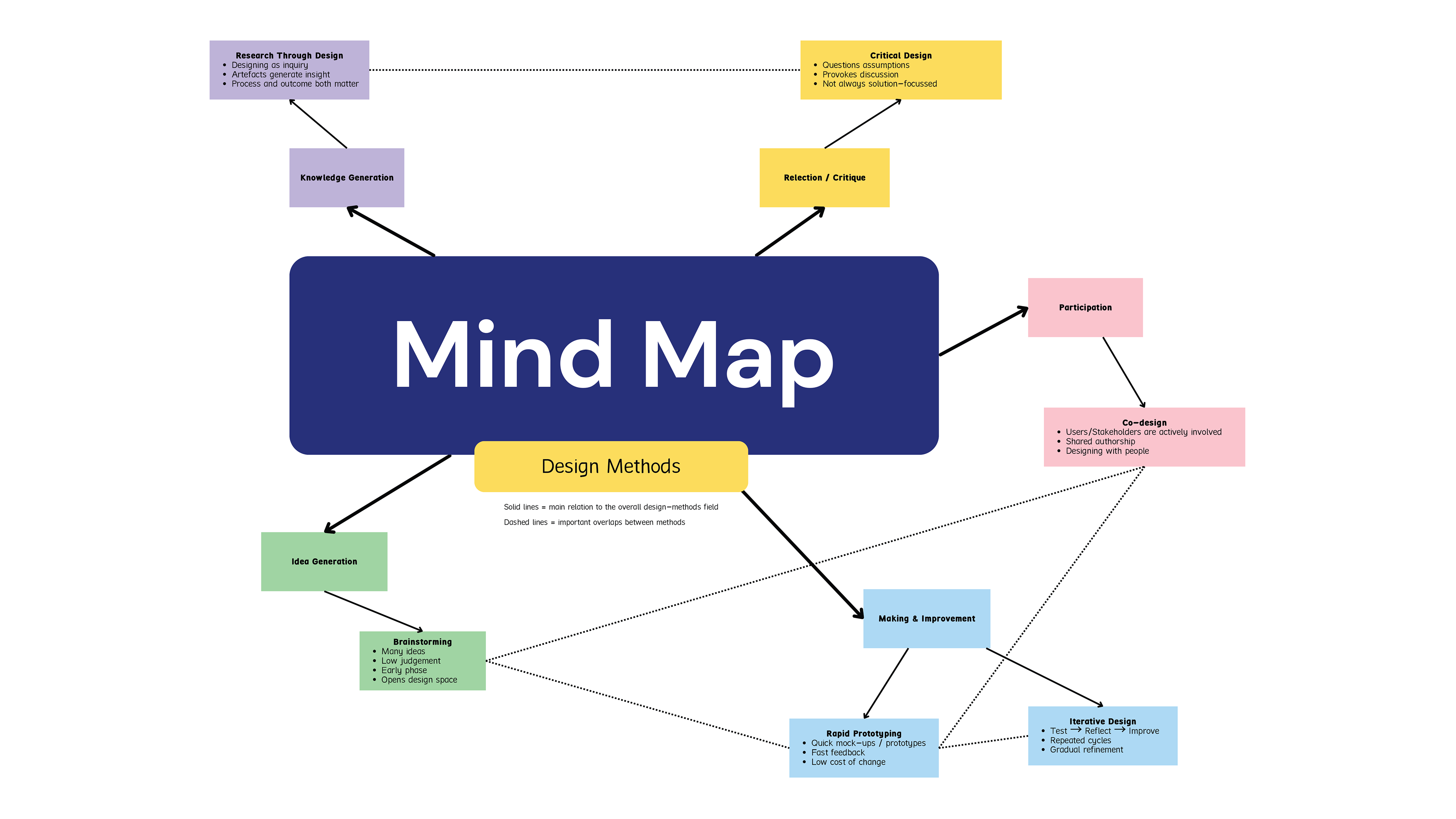
Figure 1. Mind map showing the relations and differences between six design methods.